
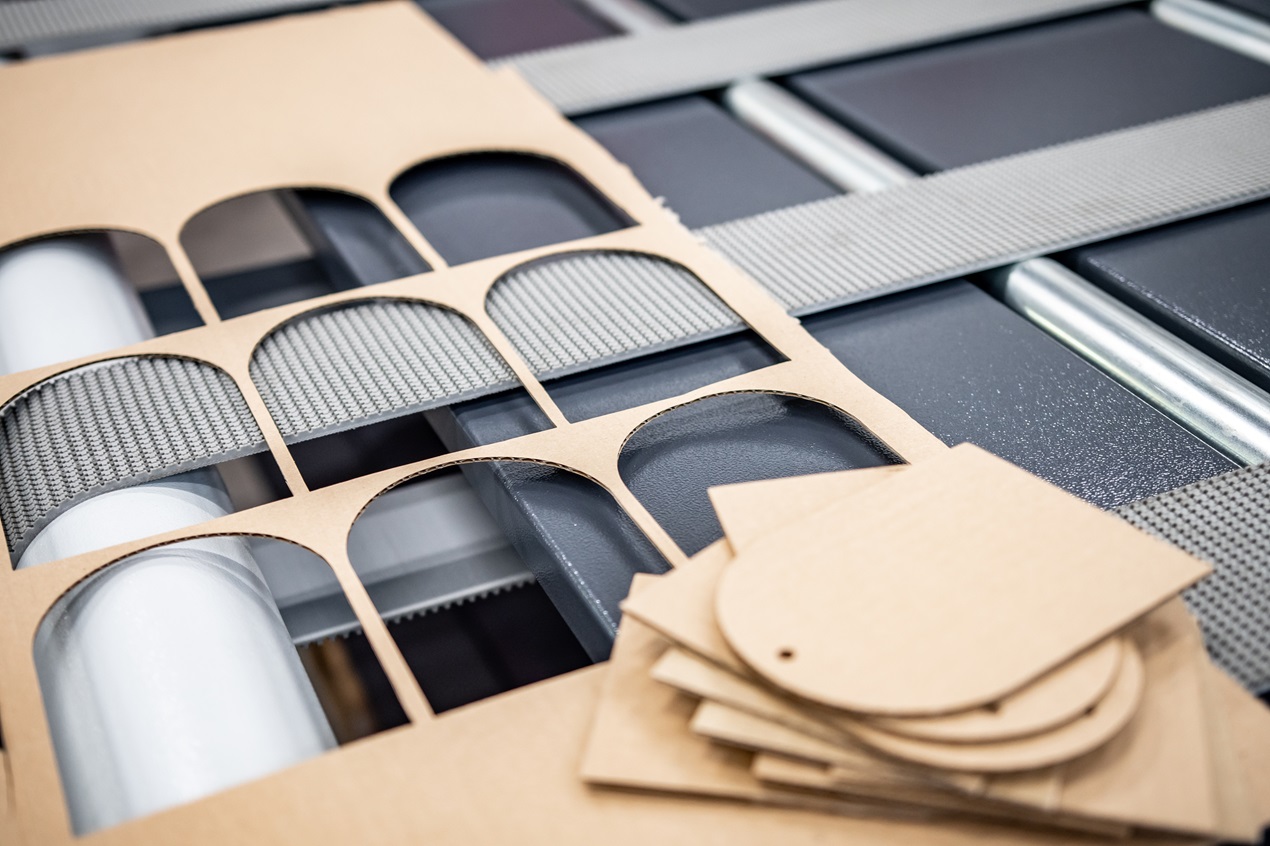

Choosing the right die cutting machine is the key to efficient and precise fabrication. Some of the most important parameters to be considered include the pressing force, the maximum thickness of the workpiece and the working speed. Each of these plays an important role in the fabrication process, influencing the quality of the cut, productivity and durability of the machine.
Pressing force – the key to precision cutting
Pressing force is a technical parameter that determines with what power the die cutting machine is able to cut the material. This is particularly important when working with a variety of raw materials – from thin films and paper to thick multi-layered sheets of cardboard or plastic. For thinner materials, using less pressing force would be sufficient to achieve a precise cut. However, for harder materials, a die cutting machine with much greater pressing force is needed.
The correct choice of this parameter not only ensures the accuracy of machining, but also extends the life of the machine. Too low a force can lead to inaccurate cuts, while too high a force can lead to excessive wear on machine parts and the blade in the die cutter. That is why it is so important to adapt the clamping force to the specific material and the type of operation being performed.
Maximum material thickness and production efficiency
The second important aspect is the maximum thickness of material that can be processed by the die cutting machine. This parameter determines what the maximum dimensions of the sheets to be processed can be, while maintaining high edge quality. Choosing the right machine for the characteristics of your production is crucial – a die cutting machine that is too weak may not be able to handle thick materials, leading to damage to the machine or interruptions in service.
Die cutting is commonly used in the packaging industry, where precise cuts in corrugated cardboard or multi-layered boards are essential to create high-quality products.
Working speed – performance at the highest level
The working speed of the die cutting machine is a parameter that directly affects the speed of orders. In mass production, where every second matters, the high speed of the machine allows for increased productivity. This parameter determines the number of cutting cycles the machine can perform in a given time.
However, faster working speed does not always translate to better results. For delicate materials such as thin films or foams, too high a speed can lead to deformation or damage. This is why modern die cutting machines from companies such as Zemat Technology Group are fitted with speed control systems, allowing the speed of work to be adapted to the specific material and production requirements.